
Website Accessibility Testing & Remediation
Website accessibility, tested and improved.
Make it easier for people to navigate your site, complete forms and use interactive content. Parameter identifies accessibility barriers, fixes them in the underlying site, and retests the agreed pages and visitor journeys.
What we work on
The parts of a site people actually use.
We find barriers in the places visitors get stuck, then fix the underlying components so the improvement holds across the site.
-
Keyboard navigation, visible focus and menus
Links, buttons and menus that work from the keyboard, with a focus indicator people can actually see.
-
Form labels, instructions and validation
Fields that announce what they are, instructions available before someone needs them, and error messages that explain how to recover.
-
Galleries, dialogs and interactive components
Image viewers, modals, accordions and tabs that move focus sensibly and return people to where they started.
-
Page structure, headings, contrast and alternatives
Headings that outline the page, readable color contrast, and text alternatives for meaningful images and media.
-
Templates and shared components
Fixes made where the problem lives, so one change to a header, form or card template improves every page that uses it.
These are the areas we scope and test. Content, captions, third-party widgets and design changes are assessed within the agreed scope and who is responsible for them.
How the work happens
Find it, fix it at the source, prove it works.
-
Assess the important journeys
We agree the pages, templates, interactions and relevant WCAG criteria. Automated checks are combined with manual keyboard review and appropriate assistive-technology testing.
-
Prioritize and implement
We explain the barriers and the recommended changes, agree the work, then correct the underlying components with maintainable code or native settings. Changes are tested safely and each one keeps a rollback step.
-
Retest and document
We recheck the agreed scenarios, keep before and after evidence, and provide a clear record of completed work and any remaining recommendations.
What you receive
Fixes you can see, and a record you can keep.
The proposal states the scope and the browsers and assistive technologies covered, so it is clear what was tested.
-
A prioritized findings record
Each barrier, where it appears, who it affects and the recommended fix, in the order worth tackling.
-
Implemented fixes for the agreed scope
Corrections made in the site itself: templates, components, settings or content, as agreed.
-
Test evidence
Automated results, keyboard checks and assistive-technology notes for the agreed scenarios, before and after.
-
A maintainable handoff
What changed, where it lives, how to roll it back and what to watch as the site changes.
Case study
CIFAL Miami: accessibility on an existing WordPress site.
For CIFAL Miami, Parameter improved keyboard interactions, contact-form labels and event-gallery behavior on an existing WordPress site. Verification included automated checks, keyboard regression tests and targeted VoiceOver testing of the form and image viewer.
Read the CIFAL Miami case study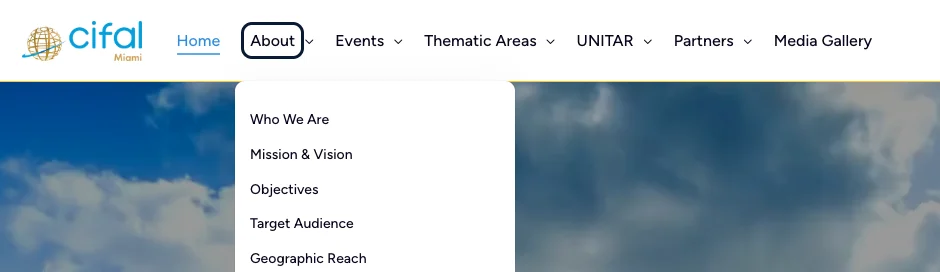
Our approach
Why testing and implementation belong together.
Scans are useful for finding some issues, but they cannot establish how every menu, form or dialog works for a person using a keyboard or screen reader. We combine assessment with source-level corrections and repeatable checks, rather than treating a score or a widget as the finished result.
FAQ
Common questions.
Can you improve an existing WordPress site?
Yes. We start with its current themes, plugins and the tasks that matter most to visitors. A rebuild is not the default requirement.
Is an automated scan enough?
No. A scan is one part of an assessment. Keyboard interaction and assistive-technology checks cover behavior that scans can miss.
Do you guarantee legal compliance?
We scope and test against relevant accessibility criteria and document the results. This service is not legal advice or an unconditional compliance certification.
What determines the cost and timing?
The templates, components, journeys, issues and verification involved. We agree the scope, estimated effort, delivery targets and dependencies before the scoped work begins.
Can you help after remediation?
Yes. Follow-up checks and future improvements can be scoped as the site changes. Site updates can introduce new issues, so retesting the important journeys is worth planning for.
Let’s make your site easier to use.
Share your website and the tasks that matter most to your visitors. We’ll identify a practical starting point.